

One of my favorite things to do is play a good board game. Sitting around a table with a group of friends, a variety of drinks and snacks within arm’s reach, attempting to vanquish a common foe, or destroy your best buddy, is pretty great. In the past 20 years I don’t think I’ve had a bad time playing a board game. This is mostly because I enjoy cooperative board games rather than competitive ones (Monopoly is the worst board game ever created, and you can’t make me change my mind), and even if you lose a cooperative game spectacularly, you still have a good time doing it. I got destroyed by Forbidden Island so hard one time that all I could do was laugh. That was 8 years ago and I still remember it.
Aside from the social benefits, a good board game will make you think and test your logical reasoning and game theory skills. Figuring out a game mechanic, exploiting a rules loophole, or devising a winning strategy can be very satisfying. That’s why I love having board games available for my middle school math students. Even the simplest game of Tic-Tac-Toe can teach students about game theory and the importance of going first or second in a game. Even though the school year is crammed with standards to teach, taking a game day, or ending a block period with 15 minutes of fun time can still be highly beneficial.
Here you can find my favorite math related board games (and some non-math specific games) that I love having in my classroom.
Disclaimer: This post contains Amazon affiliate links. As an Amazon Associate I earn from qualifying purchases.
1. Dara
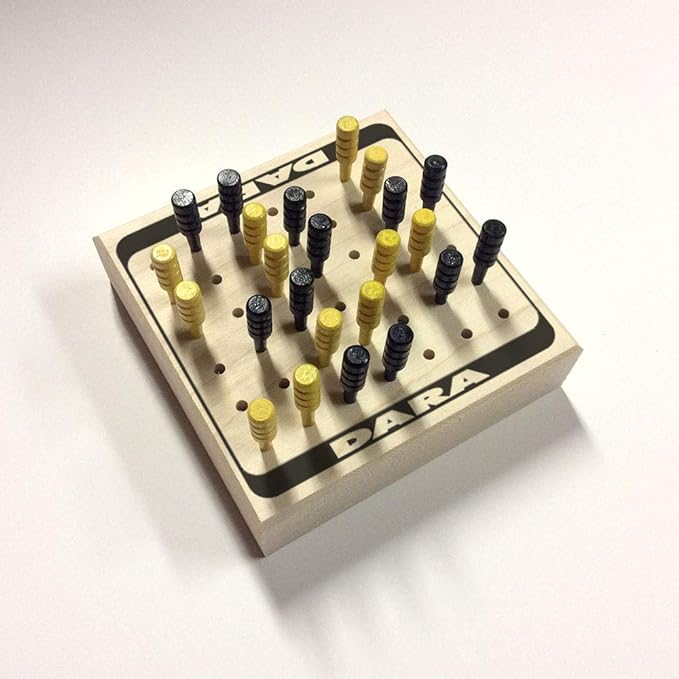
A great game for two players, Dara has players place 12 pegs each on a grid (or stones/markers/chips on a paper grid), and take turns moving them to align three pegs in a row. Get three in a row and you capture one of your opponent’s pegs. Capture 10 of your opponent’s pegs and you win.
This game is simple to learn and play. If you need a free printable game board, I made one that you can find here.
2. Achi
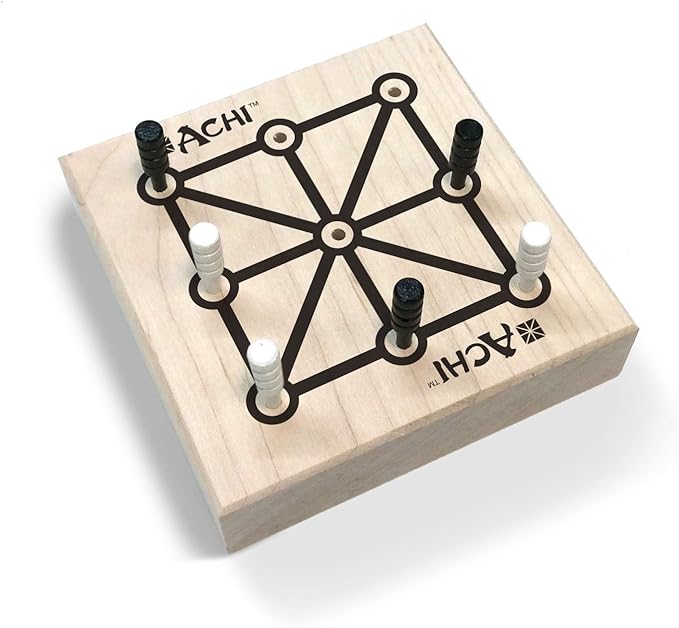
Like Tic-Tac-Toe, but better. The goal in Achi is to still get three in a row, but there is never an annoying “Cat’s Game”, because if nobody wins after placing their initial pegs, the game continues by moving pegs along the connecting lines. Here is a free PDF you can use that explains the rules, and provides a printable game board thanks to the city of Cambridge.
Both Dara and Achi can be played on the cheap with paper game boards and a set of double-sided integer chips. You can find quality integer chips here. Not only do they make great versatile game pieces, that are wonderful for 6th and 7th grade students learning operations with integers.
3. Qwirkle
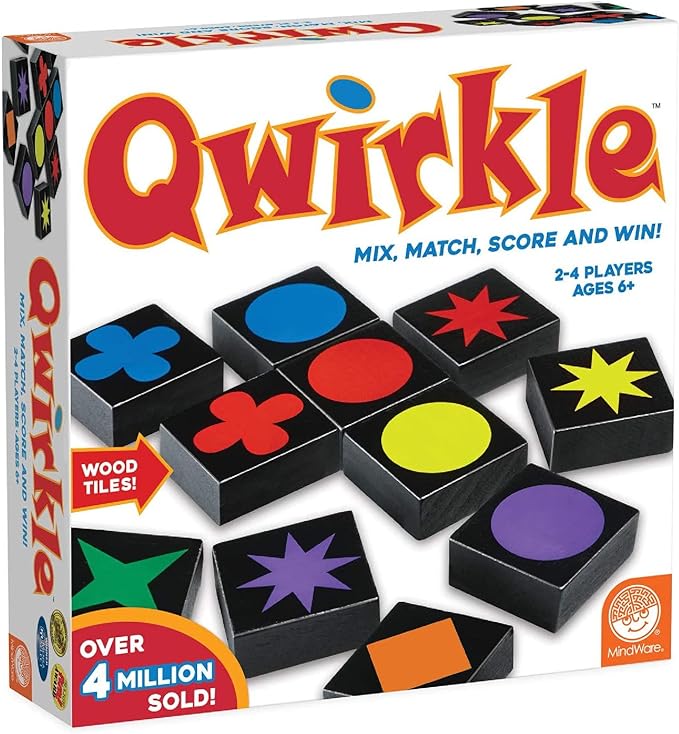
I love Qwirkle. Qwirkle is a tile game in which you try to either match like colors in a row, or like symbols in a row. There are 6 different colors and six different symbols. The more you match, the more points you get. Qwirkle can be played with 2-4 players and can be done in about 30 minutes. The tiles are made of wood and are quite durable. My only issue is that I find the orange and red tiles to be difficult to differentiate. If you have colorblind students, MindWare does offer a color blind friendly version.
4. Prime Climb
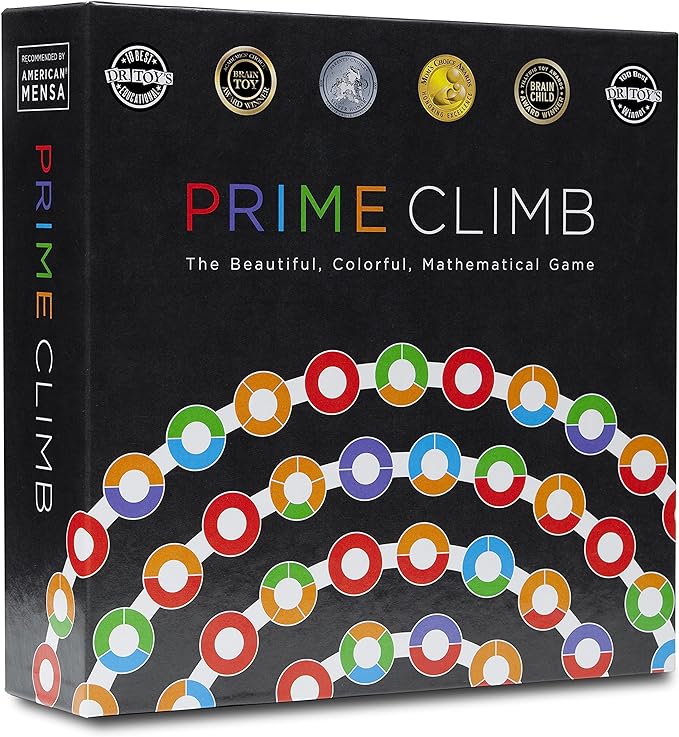
The first math specific board game on the list, Prime Climb is a great way to engage students in using mathematical operations and prime numbers. Prime Climb feels a bit like the classic game Sorry, in that it has aspects of bumping opponents back to the start. The game incorporates dice rolling and card draws, which create random aspects, but players can use the numbers they roll and cards they draw very strategically, so it’s not just a giant RNG-fest like Sorry is.
5. Ultimate Tic-Tac-Toe
What’s better than Tic-Tac-Toe? Well, Ultimate Tic-Tac-Toe, obviously. Ben Orlin does a much better job of explaining this game on his site mathwithbaddrawings.com, so I recommend checking out his walkthrough. Basically, you take the regular Tic-Tac-Toe board and insert a smaller Tic-Tac-Toe board inside each of the 9 normal Tic-Tac-Toe spaces. Want to claim a space? You need to first win the smaller game inside that space. Tic-Tac-Inception!
The best part about this game is that you only need a pencil and paper, or a decent sized whiteboard to play. No pieces to lose or Meeple to step on.
6. Multi
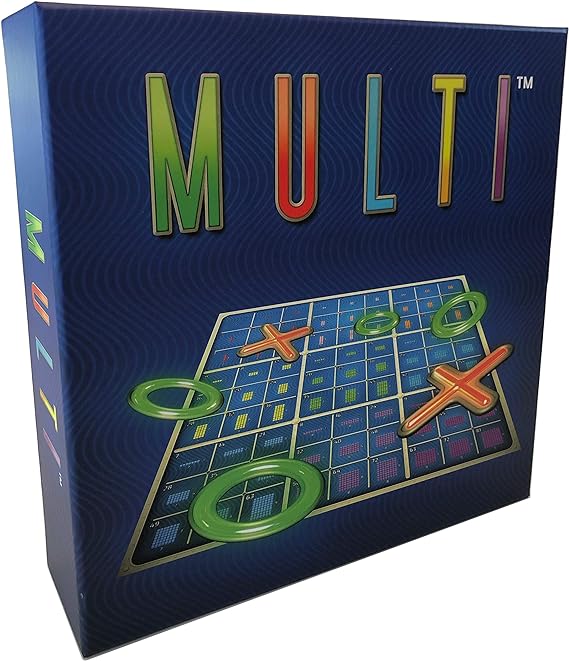
Multi is a mash-up of multiplication tables and Ultimate Tic-Tac-Toe. Instead of simply choosing a space to put an X or an O, the player must use multiplication facts and factor strategy to be able to place pieces where they want. Great for practicing basic math facts, but in a way that isn’t forced or boring and rote.
7. Proof!
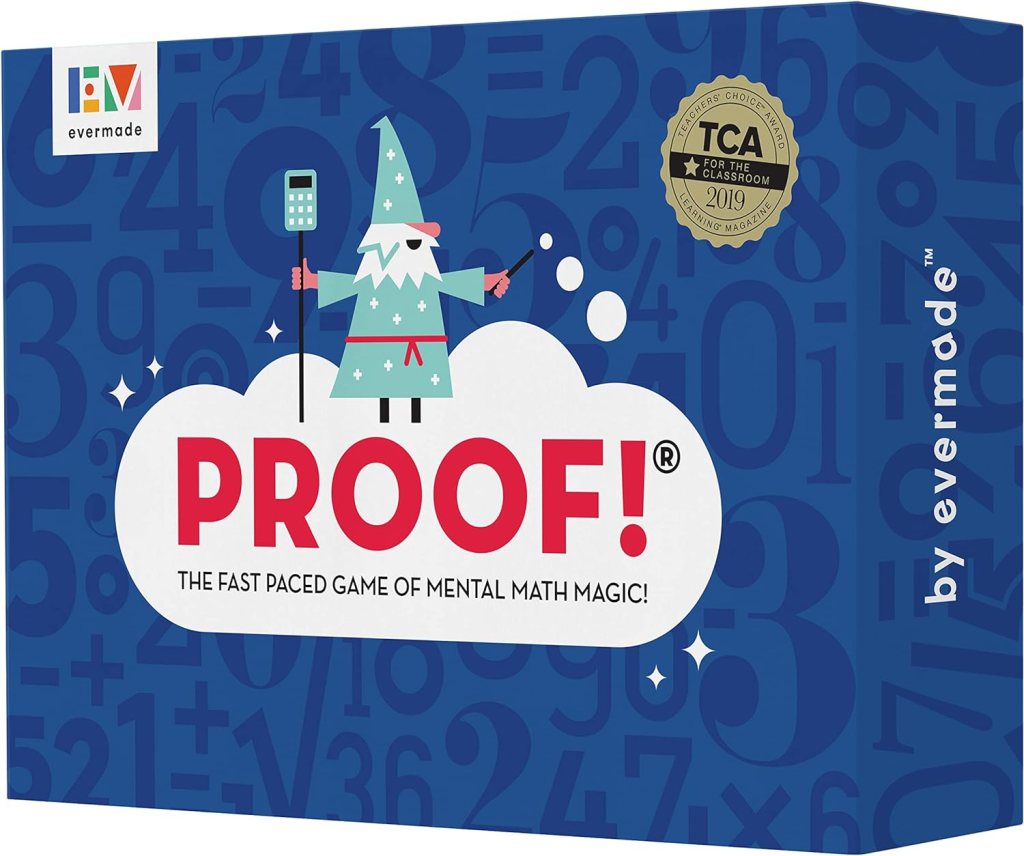
Proof! is a math based card game in which players attempt to create correct equations based on the 9 cards shown in a 3×3 grid. Equations must use at least three cards, and can use the four basic operations as well as square root. Flip the cards over, claim a number that you can create, then prove it. If you are correct, you keep the cards. The player with the most collected cards at the end of the game wins.
Note: The main downside to this game is that it rewards speed. If you have students who have math anxiety due to taking timed math fact tests, this might not be a great game for them. One variant you can try is to have students work as a team to create as many equations as they can instead of doing the math as fast as possible.
8. Coup
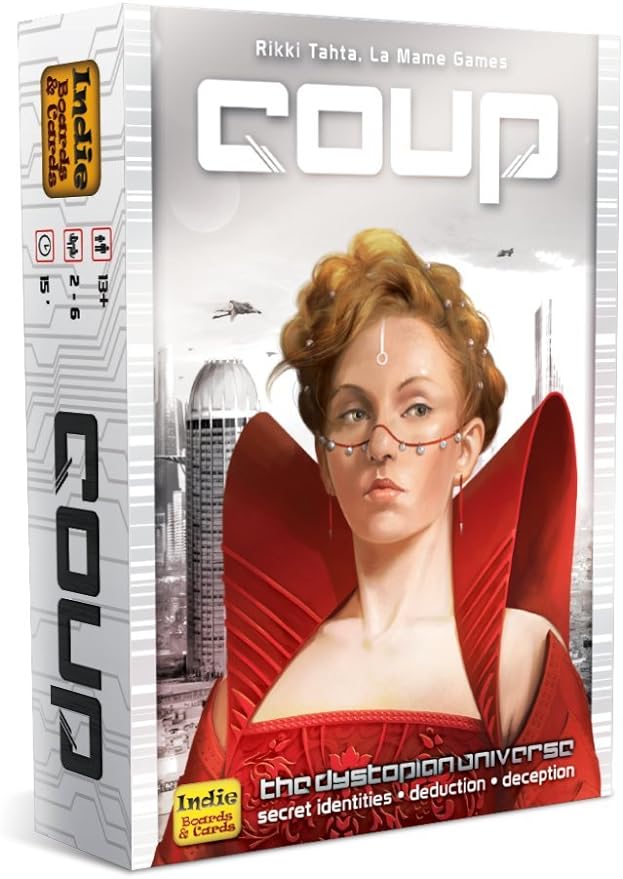
Sometimes you just want to play a game were you can lie and cause havoc. Coup is a competitive card game in which you lie, cheat, and steal your way to victory. Each player is dealt two cards face down that give specific roles, such as Assassin or Duke, and allow players to perform certain actions. The great thing about the game though is that you never need to actually play the roles you have been dealt. Want to be a Captain and take 2 coins from another player? You can certainly try. If you’re caught lying, though, you lose one of your cards and you are halfway to defeat. Lose both cards, and you are out. Last player standing wins.
Definitely more appropriate for middle and high school aged players, Coup contains a lot of game theory and logical thinking based on the rule set. Players come to Coup for the lying and deceit, but stay for the strategy and intrigue. And the lying. The lying is also really fun.
9. 21st Century Pattern Blocks
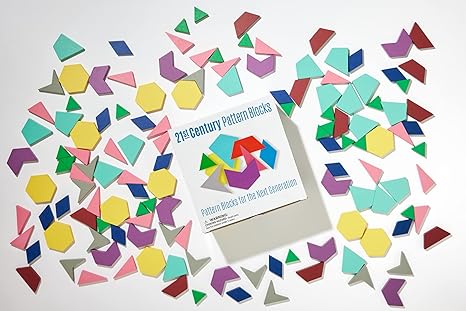
Sometimes all you want to do is make a pretty pattern with some blocks. Not only are these blocks extremely well made, they also foster great discoveries about polygons and can be used for other topics, such as visual patterns and linear functions. I’ve never had a middle school student not want to play with these blocks. The hard part is getting them to stop.
Those are my current favorite board games to have available in class for my middle school students. What did I miss, or what are you using that you and your students are excited about?
 EZMath Blog