The Not-So-Obvious Things You Should Have in Your Classroom on Day One.

Sometimes that fly in your room just needs to die.

The lesson is going great. Students are engaged, working together on a high-cognition task. Conversations are on target, whiteboard markers are squeaking, math is in the air. Students are totally in the flow.

An inquisitive student approaches. You are ready to field their question (most likely with a question of your own, or a smile and a move on since they just want an answer and you are not an answer key, my friend).

“Mr. Zuercher?”

“Yes, my brilliant, hard-working, persevering student of mine?”

“There’s a spider on my desk”

“Not what I was expecting, but ok.”

Flow interrupted. Assorted students freak out. One of them bolts from the room. Math is no longer in the air. What a shame.

It’s a fact of life in teaching that situations will arise that you are not expecting, usually at the most inopportune time. I will gloss over the “Can I go to the bathroom?” question during the middle of a discussion trope. I’m thinking more along the lines of “It’s the last 10 minutes of school and right outside your classroom window a school groundskeeper is wrestling to the pavement a completely nude man high on some kind of substance while the nearby elementary school kids are being let out of school for the day and witnessing….everything”.

Whether it is day one of year one, or the second to last day of your teaching career, you will undoubtedly run into a situation where you don’t have what you need. It’s going to happen, but if you have the following items in your teaching toolbox, you might be prepared for them more often.

Bandages
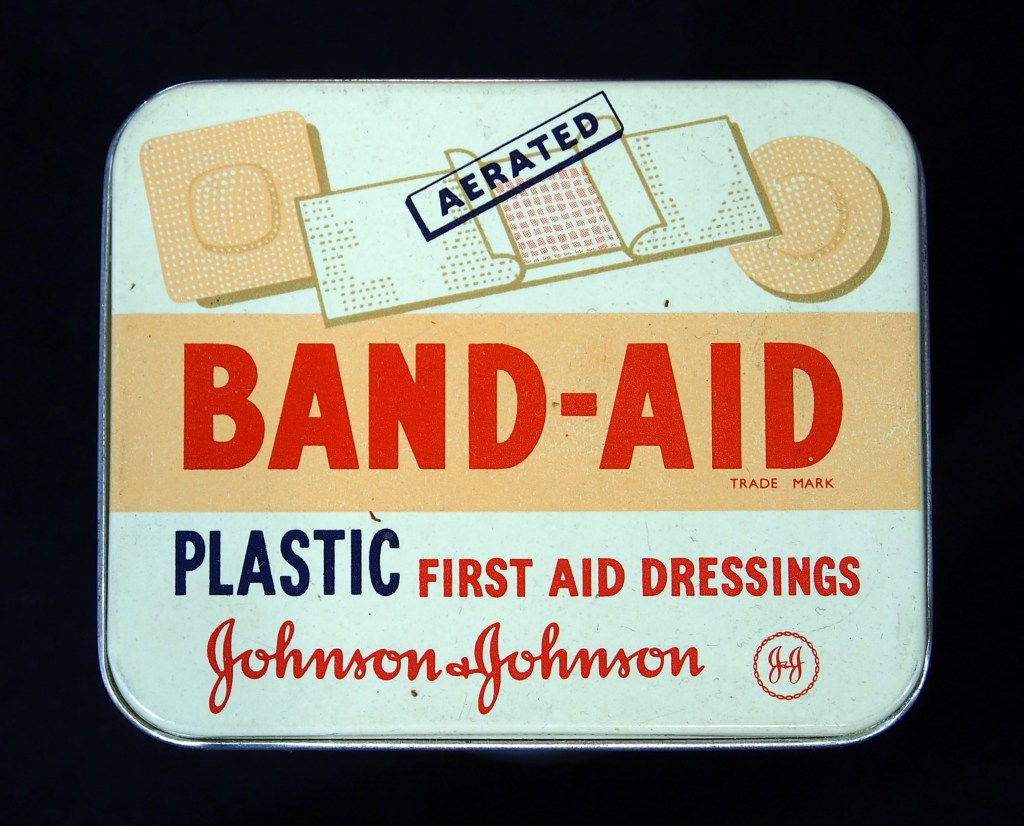
Get all the sizes. You will need them.

Yes, the classroom is mandated to have a first aid kit. We have a nifty backpack right next to the door that has all sorts of items in case of an emergency. There’s even a glow stick for…reasons? In 18 years I think I have used the first aid kit maybe five times. However, I shell out bandages on the regular, at least once a week. Probably the most sought after item in my teacher desk is the big box of assorted bandages that I always buy at the beginning of the year. I don’t know what these kids are doing, but man do they need bandages. Most often it is the student who comes in from lunch or break with a skinned knee. There’s also the random hangnail or cut finger. I don’t need an explanation, just grab a bandage and don’t leave the trash on my floor! As an added bonus, get some extra antiseptic wipes from the nurse’s office. The first aid kit never has enough.

The Fly Swatter
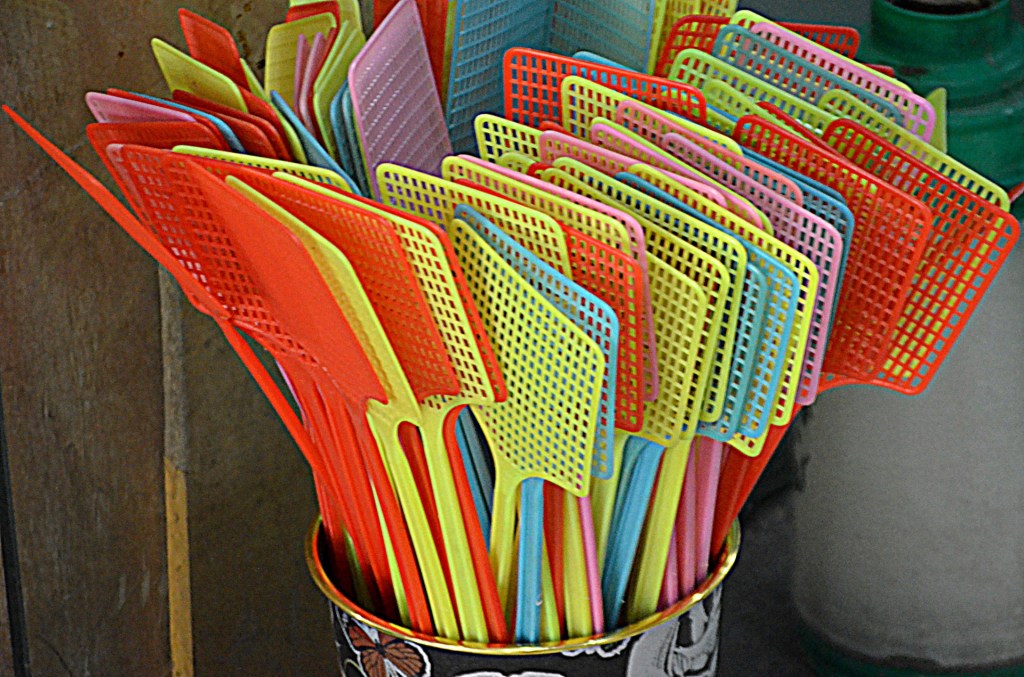
Insect death comes in a variety of colors.

I would love to report that I respect all life on the planet equally, and that every creature should be cherished. I cannot report that. It would be disingenuous of me, and that’s not what I’m here for. Sometimes that fly in your room just needs to die. Having a quality fly swatter at your disposal is critical. Bees, spiders, roaches and the like will all eventually find their way into your classroom, and they must go. My fly swatter has a happy face on it, because I value irony.

If a bird flies into your room, the fly swatter will not be effective. Just turn off all the lights and open the door. It usually works.

In case of a deer…run.

The Basic IKEA Tool Kit
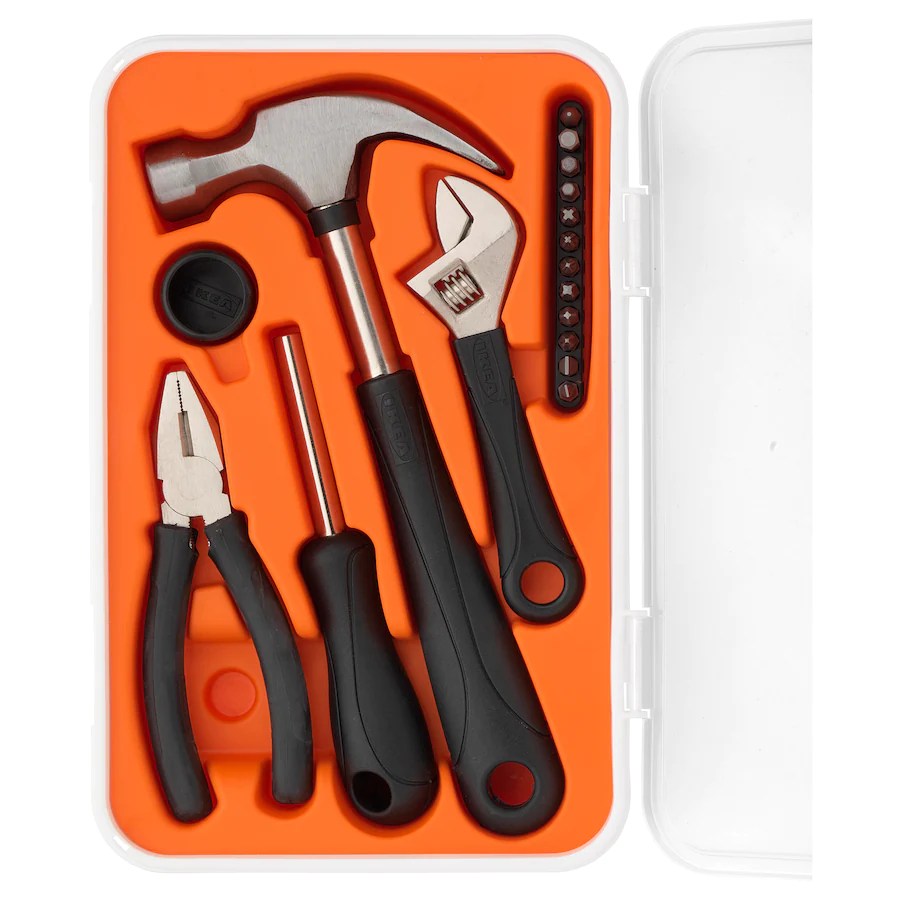
Simple. Cheap. Highly effective.

When I first moved into my condo back in the mid 2000’s I was shopping for furniture at IKEA and I spotted this toolkit at the checkout aisle. I think it was $5.99. Best money I have ever spent. Things in your room are going to break. You will need to hang difficult items on your wall or from the ceiling. Desks and chairs need tightening. I have used every piece of this toolkit multiple times, and I am always glad I have it.

The hammer is also effective against deer.

The Door/Window Shade

My classroom door happens to be 90% window, which is not ideal in a lockdown situation. The ability to quickly cover your windows and doors is essential, unfortunately. Having a quick rolling or pull-down shade is a must for every classroom. Some teachers I know use a large piece of rolled up chart paper taped to the top of their door, which can be implemented quickly in case of emergency. A long time ago a student gifted me a life-size Corey Perry hanging fabric height chart. Mr. Perry hangs in my doorway, protecting us from dangerous situations, such as naked strangers on amphetamines.

Tells you your height, and protects you from danger?

Mr. Perry is somewhat effective against deer.

The Glade Plug-In

Plug it in, plug it in.

My students come to realize pretty quickly that I like to sing in my class. My Canadian National Anthem is pretty solid. I have a pretty decent “Let It Go” chorus as well. My all-time classic though is the Glade Plug-In commercial jingle. Comes in really handy when you are teaching evaluating algebraic expressions. Do you know the value of a variable? Plug it in, plug it in!

Aside from being a fun teaching tool, the Glade plug-in is also a real nose saver.

It’s late August. 92 degrees. P.E. is getting their first benchmark times for the mile run. Students are…pungent. The bell rings and they have 3 minutes to get to your class. You are going to be very thankful for that vanilla scent that permeates the air in your room. Doesn’t solve everything, but you’re gonna be glad you have it over nothing at all.

The Hygiene Box

Please, take as many as you need.

Hit that Target bargain bin aisle every once in a while and try to stock up on travel-size deodorant, mouth wash, and feminine hygiene products. Organize them in a box and put them underneath wherever you have the bathroom pass. The standing rule in my class is that I trust my students to use the restroom when necessary. It’s nice to have certain items available to them when they go. No judgement, just take what you need and handle your business.


What are your favorite items that you have in your classroom for those unexpected situations? What have I forgotten? Leave a comment below.

A Charger Card for Community College

Heck, the textbooks cost more than the actual courses!

Responsibility. Respect. Integrity. These are the core values that our school staff embraced some years back when asked to re-imagine our school discipline policies. A big emphasis of the PBIS (Positive Behavioral Interventions Support) system is to basically catch kids doing good. When students are exemplifying the core values, we are to recognize them for it, and tell them why. One of the ways we do this is to give out Charger Cards, which act as a sort of currency that students can exchange for items at the school store, or privileges such as getting to the front of the lunch line. It’s a positive way to encourage and reward students doing right.

Inspired by this, one of the things I aim to do with this blog is to give out Charger Cards to people, programs, and institutions that I see doing well and making the world a better place. It can be really easy to complain about all the problems in the world of education. Those who know me well can attest to that, as I’ve had many frustrating venting sessions with my friends and family, especially during Covid. Instead of focusing on what’s wrong, I’d like to shine a light on what I see as going right (or at least, the right direction).

Therefore, I hereby give my first Charger Card to…community college!

COMMUNITY — “Herstory of Dance” Episode 407 — Pictured: (l-r) Donald Glover as Troy, Danny Pudi as Abed — (Photo by: Colleen Hayes/NBC/NBCU Photo Bank via Getty Images)

I love community college. Specifically, Orange Coast College in Costa Mesa, California. I absolutely struggled and clawed my way through middle and high school in my youth. Dealing with ADD and chronic depression during my teen years did not empower me to succeed in my academics, and I barely graduated with nary a superfluous credit on my transcript. While most of my friends were going off to four-year universities, I was just glad to be leaving high school with a real diploma. I distinctly remember my friend group stressing about SAT tests, while I couldn’t care less, since I knew I would never need them. You only need those if you plan on applying to university (activate galaxy brain meme here). Enter O.C.C.

Attending Orange Coast College was one of the best decisions I have ever made. It allowed me to further my education, stay at home and save money (there was no chance that I was mature enough to live on my own at that point in my life), and pay for it all with a part-time job. Back then a single credit cost $11 (yes, you read that correctly), which meant I could take 12 credits of classes for the low low price of $132. Heck, the textbooks cost more than the actual courses! I could go to classes in the morning, stop at Wahoo’s Fish Tacos for lunch, then work my part-time job from 1-5pm. Life was pretty great.

In addition to the low cost, O.C.C. gave me the opportunity to explore different subjects and careers. I wish I had the classic origin story of always knowing that I wanted to be a teacher, and that it called to me from an early age. Truth is, I had no clue what I wanted to do with my life. After completing much of my general ed courses, I stumbled into an elective called “Introduction to the Teaching Profession”. “Teacher” always came up as a possible career whenever I took those aptitude tests, so I figured I would give it a try. As part of the course I had to log observation hours in a school setting. I managed to do my hours at my old elementary school with my previous 4th grade teacher. I was hooked. It was just so much fun. I went home after that first day and realized that teaching was for me. This epiphany was delivered by a $33 elective course I could take on a whim because of its low cost.

Now, this was back in the mid-90’s. Today, at least at O.C.C., two years of community college tuition are actually free using the Pirate’s Promise program. I can’t imagine a better start to your higher education journey than free. Compare that with two years at Cal State Fullerton (about $14,000 for two years), UC Irvine (about $33,000 for two years), or Chapman University (about $165,000 for two years). I just can’t fathom graduating from college after four years with up to $330,000 in student loan debt (go Panthers!). I tried to figure out how long it would take to pay that off, and the online payoff calculator app just produced a sad face emoji.

Obviously, community college makes way more financial sense than most other options. The problem is, most of my students today laugh at the idea of attending schools like O.C.C. I bring these examples up in class all the time, especially when teaching about compound interest, and even when presented with the facts, they dismiss the idea. Keep in mind, these are middle school students. Long term planning is not exactly a strong attribute in a 13-year old. For whatever reason, community college still has a reputation as “not a real school” or “school for losers and dropouts” (real quotes from my students). Whether it’s societal, cultural, or familiar, these attitudes and misconceptions about higher education persist, and it drives me crazy.

Community college provides a low-cost, high value education to anyone who desires it. It features a flexible system that can work with many types of schedules, offering all who seek it ways to gain more education, skills, and opportunities. It is an amazing place to explore at low risk and perhaps find a career you never even considered. Because of this, community college receives my first Charger Card for being awesome.

My Seasons of Summer

One summer it was the entire first season of Critical Role.

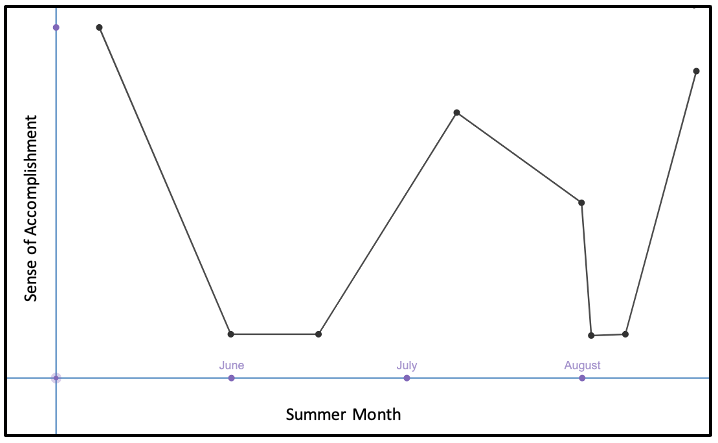
The day after the last day of school is pretty great. I won’t say otherwise. Ten months of stress, endless decision making, and exhaustion seem to just melt away. Waking up on that Saturday morning knowing that I have zero work responsibilities brings a calm and serenity that is difficult to describe. What should I do today? Well, anything I want! It has become my tradition on that first Saturday to make and devour a huge stack of pancakes drowned in syrup, topped with two eggs. That’s the whole list for the day. It’s pretty much the first to-do list of the year that I actually complete. After that, the seasons of summer begin.

The Blah season begins on day two. This season lasts for about two weeks. I do pretty much nothing. Yes, chores happen, workouts are completed, meals are cooked, but these days are mostly uneventful and not worth remembering. I feel as though my brain needs these two weeks of nothing to recover from the ten months of EVERYTHING. I try to make as few decisions as possible, spend as little money as I can, and just kind of…exist. The “few decisions” aspect is really the key here. I don’t know how most professions work, as I have only ever been an educator, but the sheer amount of decisions I make in a day of teaching is… a lot. According to the few studies that have been done on this, it is estimated that teachers make about 1,500 decisions in a single teaching day. In recent years I have noticed feeling completely exhausted after the school day, crashing around 4pm. My brain is just so tired. The added stress of teaching in the Covid classroom has not improved the situation. I need the Blah season. It recharges me and gives me energy for the next season.

By the end of week two, the epiphany hits that I haven’t done anything with my summer vacation. So begins the Hopeful List season. Lists are made, goals are written down, life questions are asked. What are my fitness goals? Which books should I read? Which places should I go? Who are the people most important to me that I need to spend time with? It’s all very exciting! Hopeful List season is full of optimistic purpose. This will be the year that I accomplish everything! It is joyful. It is full of wonder.

It lasts about three weeks.

Hopeful List season morphs into Realistic List season. Plans are scaled back. Lists are edited down. Was I going to travel to Iceland? Well, maybe just go to Chicago instead. That epic surf trip to Fiji? Maybe just a weekend of surfing at Trestles. Was I going to work out seven days each week with a specific plan for each day? Hmmm, four days seems much more manageable. That six novel science fiction saga I was going to read? Book one sounds good. I still accomplish things, but by the end of the season I always feel like I could have done more.

These three seasons usually take up about a month and a half of summer. By late July there is almost always an event that triggers the next season; The Back To School Shopping Ad. The main culprit is almost always Target. At some point in late July, like a lightning bolt from out of nowhere, Target hits me with an advertisement for backpacks and glue sticks. I’m never ready for it, and it always punches me in the soul. Everything was going fine! I was getting things done. Goals were being (somewhat) accomplished. Now I know that my days of carefree living are coming to an end. Melancholy season has begun.

Melancholy season does not exist because I do not enjoy my profession. I absolutely love watching my students grow and learn. It’s just that I know how much work it takes to make that happen, and the thought of that work during a time in which I’m currently doing very little is extremely overwhelming.

Melancholy season can last anywhere from 3 days to 2 weeks. Sometimes I call this “Netflix Season”, as the power of the Target soul punch is so strong that I am unable to do much more than consume streaming content. This year it was Stranger Things, Ozark, and Picard. One summer it was the entire first season of Critical Role. No matter what content I am slovenly consuming, at some point the final season begins to emerge.

Purpose season is maybe my favorite one of the whole cycle. It starts to tickle my brain in late July or early August. No matter the duration or severity of Melancholy season, at some point I start to feel the pull of Purpose season. The idea that I am meant to do something, and my life requires a purpose. Lazily watching TV is nice, but nothing is really accomplished. There is no intellectual payoff, no challenge, no achievement. I am pulled back into the world of education. I start thinking about new lesson ideas and creating plans. I furiously search Math Twitter seeking out new ways to do things that other math teachers are excited about. I scour my Google Drive, weeding out lessons I know I need to delete or revise. I have a purpose again.

Every school year I have doubts about whether this profession is really what I want to do. The last few years especially. Every summer I wonder if Purpose season will emerge. Will I still have the passion to do this work? So far, it has never failed to arrive. As of writing this post I have started to feel it tug at the back of my mind (the Target ad hit me a few days ago). It actually came a little early this year.

It’s so (not) easy!

“So we can’t say easy in E.Z.’s class?!?!”

Ask any of my students what my biggest pet peeves are and I’m pretty confident they will be able to tell you my top three. This usually comes up in the first few weeks of school, as I ask them theirs when they create their “What Are You All About” Google Slides. I make one as well, because I always try to complete whatever it is I am asking them to do. Before you read my list, think about your top three. Are they as pedantic as mine?

  1. People who add an “h” to the end of the word “height”. Length? Yep, there’s an “h” at the end. Width? You betcha! Height? NO! Just… stop it!
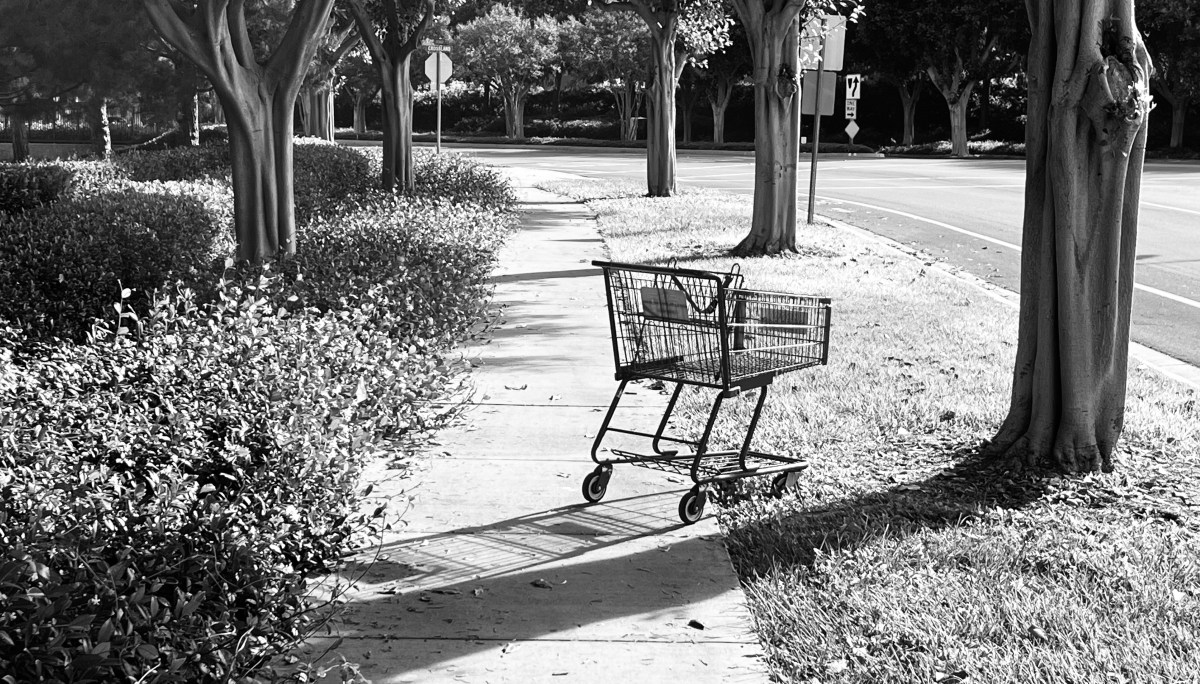
  2. When someone doesn’t return their shopping cart at the grocery store and just leaves it in the middle of the parking spot, thereby fooling you into thinking you have a space to pull into. Savages.
  3. When a student is working on a math problem and loudly claims “This is so easy!”.

Obviously, the first two items in the list don’t really matter. They just bug me. I put them on my list because they really are just small things that cause me a minor moment of frustration, but in the grand scheme of things really mean nothing. It’s that third one though that can be so damaging in the math classroom.

I use this list as a way to introduce growth mindset and math empathy in my class. When I was in elementary and middle school I routinely had a very difficult time focusing on my work, lessons that were being taught, or listening to others. A.D.D. will do that to you. I struggled in some areas, and excelled in others. During math time, if I was able to focus, I generally did fine (don’t ask me about homework completion though). During the times I could not focus I would fall into a confusion spiral and get supremely frustrated, raising my stress and anxiety levels. My face would get hot and itchy. Invariably I would be staring blankly at my paper as a nearby student would sometimes remark, “This is so easy”.

It. Felt. Awful.

Everyone else can do this, why can’t I?

How come I am so stupid that I can’t figure this out?

What’s wrong with me?

Insert negative thought and/or emotion here.

Looking back, I understand now that the other students weren’t trying to make me feel bad (I hope). In most cases, they were probably proud of themselves and what they could do. But as I struggled, it only made me feel worse.

I share this with my students at the beginning of the year to help them build math empathy. There will be times that they understand a concept very quickly, and other times where it will be a struggle. Some days they just aren’t with it, thinking about an important friend problem, family issue, or just being hungry. Other days they will be a math superstar. Nobody ever knows the full story of someone else. But if we build in some math empathy into our words, it can go a long way.

So we try our best not to judge the math, or the person. Instead of the phrase “this is easy”, we gravitate towards, “I think I understand this”. Instead of “This is so hard” we try, “I’m not sure where to start”, or “What I’m trying doesn’t seem to work. What am I missing?”. Just giving a classmate the solution is replaced with,”Explain to me what you have tried so far”. It can take weeks and months to change the language in the room, but the effort is worth it.

About five years ago I was leading the discussion with one of my classes about why saying “this is easy” can be so harmful to others. After wrapping up a productive discussion, one of my students remarked, “Wait, what’s your first name again?”

“Eric, but you won’t ever be calling me that…”

“And your last name starts with a Z?”

“Yes…”

“So, your initials are E.Z.?”

“Sigh…. yep.”

“So we can’t say easy in E.Z.’s class?!?!”

“Nailed it.”

“That’s wack.”

“I know, right? Ok, let’s get into today’s work on scatter plots and start measuring arm spans and then how tall you are in inches”.

“Don’t you mean our heighth?”

“You did that on purpose, didn’t you?”

“Maybe…”

“Well played”.

I love middle school.